Microneedling With AnteAGE Growth Factors: What Makes It Different From Standard Microneedling
Key Takeaways:
- Standard microneedling triggers collagen production through controlled skin injury, but adding AnteAGE growth factors into those microchannels significantly amplifies the cellular healing response.
- AnteAGE uses bone marrow stem cell-conditioned media — a precise blend of cytokines and signaling proteins — not live stem cells, and peer-reviewed research suggests it outperforms PRP for most collagen induction patients.
- Columbine Aesthetics offers microneedling with AnteAGE growth factors at $400 per session or $1,000 for a three-session series, with results that compound meaningfully over a full treatment plan.
Standard microneedling creates thousands of microscopic injury channels in the skin, prompting your body to produce fresh collagen. Add AnteAGE growth factors into those same channels immediately after, and you give the skin’s repair machinery a far more precise and potent signal to work with. The difference between these two approaches isn’t subtle — it shows up in healing speed, collagen density, and long-term texture improvement.
How Standard Microneedling Works
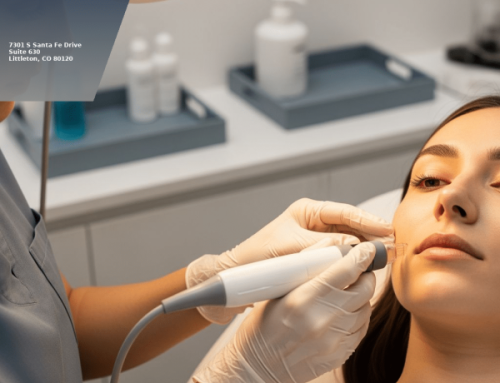
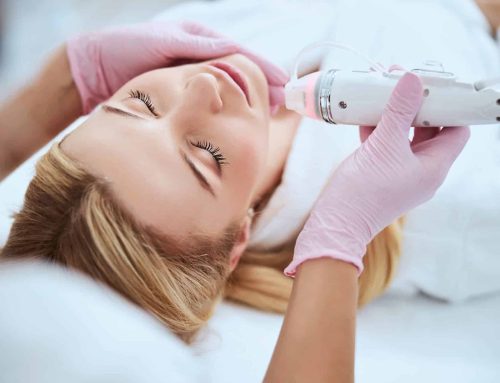
A microneedling device uses a cluster of fine needles to create controlled punctures across the skin’s surface. Each puncture is tiny — typically between 0.5mm and 2.5mm deep depending on the treatment area and target concern. Your skin registers these as minor wounds and launches its natural repair sequence: inflammation, cell proliferation, and tissue remodeling.
That remodeling phase is where the benefit lives. During the weeks following treatment, fibroblasts produce new collagen and elastin to fill and strengthen the treated areas. Over a series of sessions spaced four to six weeks apart, that cumulative collagen deposit visibly tightens texture, softens scars, and improves overall skin quality.
The process is straightforward and well-documented, but it has a ceiling. Your skin responds as well as its own internal signaling allows. If growth factor levels are depleted — which naturally happens with age, sun damage, or chronic inflammation — the healing response is slower and less thorough. Standard microneedling depends entirely on what your skin brings to the table.
What Growth Factors Actually Do at the Cellular Level
Growth factors are proteins and cytokines that act as chemical messengers, instructing cells to migrate, proliferate, and differentiate. In wound healing, they coordinate the entire repair process: they signal fibroblasts to produce collagen, direct keratinocytes to resurface damaged tissue, and regulate inflammation so repair happens efficiently rather than chaotically.
Normally, these signals travel through the bloodstream or from surrounding healthy tissue. But microneedling creates a unique opportunity: the microchannels formed by the needles remain open for approximately 30 to 45 minutes. Applying a growth factor solution directly into those channels bypasses the skin’s outer barrier entirely and delivers signaling proteins straight to the dermal layer where collagen synthesis happens.
The result is a stronger, faster, and more organized healing response. Rather than waiting for your body to recruit growth factors from adjacent tissue, you’re delivering them in high concentration precisely where the remodeling work needs to occur. Think of it as giving the construction crew their materials on-site instead of waiting for a delivery that may be delayed or incomplete.
Why AnteAGE Is Different From PRP
Platelet-rich plasma (PRP) became the dominant growth factor adjunct to microneedling a decade ago, and for good reason — it contains genuine growth factors drawn from your own blood. However, AnteAGE works through a fundamentally different mechanism, and the distinction matters for clinical outcomes.
AnteAGE’s formulation is built on bone marrow stem cell-conditioned media. To be precise: these are not live stem cells injected into your skin. The product contains the signaling molecules — growth factors, cytokines, and exosomes — that bone marrow stem cells secrete as they go about their biological work. That secreted environment is captured, standardized, and concentrated into a stable serum.
Bone marrow-derived stem cells are among the most potent sources of regenerative signaling in the human body. They are the cells your own body deploys during serious tissue repair. The conditioned media they produce contains a broader and more complex profile of cytokines than a PRP preparation, which is limited to what circulates in peripheral blood platelets.
From a clinical standpoint, there are additional practical advantages. PRP requires a blood draw, centrifuge processing, and immediate use — the entire preparation adds time, complexity, and minor patient discomfort. AnteAGE is a pre-formulated, pharmaceutical-grade product with standardized growth factor concentrations. Every session delivers a consistent signal, not one that varies based on the patient’s platelet count that day or how recently they had coffee.
Peer-reviewed literature on bone marrow stem cell-conditioned media in dermatology is still building — as of 2026, several controlled studies support its role in accelerating epidermal repair and increasing collagen density compared to treatment with microneedling alone. The research foundation is strong enough that Allison Page, NP-C at Columbine Aesthetics, integrates AnteAGE into her clinical microneedling protocol as the standard of care rather than an optional add-on.
Who Benefits Most From This Treatment
The short answer is that most adults with visible skin concerns respond well. The longer answer depends on what you’re treating.
For acne scars, microneedling with AnteAGE growth factors targets the fibrous bands and collagen disorganization beneath depressed scars. The microchannels physically break up scar tissue while growth factors direct new collagen to fill in the void. Atrophic (pitted) scars, including rolling and boxcar subtypes, typically respond over three to four sessions. Results are gradual — collagen remodeling takes months — but the improvement tends to hold.
For fine lines and early laxity, the treatment addresses the underlying collagen deficit rather than temporarily filling it. Patients in their late 30s to early 50s often see the most consistent gains, particularly in perioral lines, crepey under-eye texture, and neck skin that has started to thin.
Texture irregularities — enlarged pores, rough surface, uneven tone — respond quickly because the top layer of skin resurfaces as part of the healing process. Many patients notice a visible glow within one to two weeks of their first session.
Hyperpigmentation responds more variably. The treatment suppresses post-inflammatory signaling that drives melanin overproduction, but deeper pigment and melasma require a longer series and often benefit from pairing with topical brighteners between sessions. Allison evaluates pigment concerns individually before recommending a protocol.
What Treatment Looks Like at Columbine Aesthetics
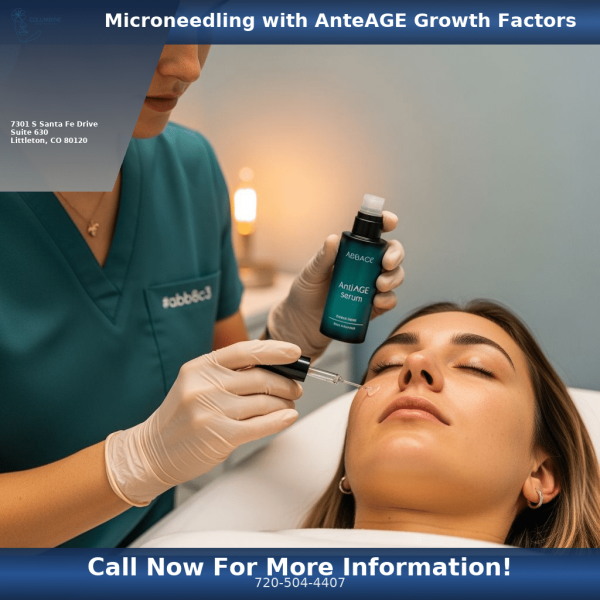
A session typically runs 60 to 75 minutes, including numbing time. Topical anesthetic is applied for 20 to 30 minutes before the device passes across the skin. The microneedling itself takes 15 to 20 minutes depending on the treatment area. AnteAGE is applied immediately after and worked into the microchannels during and after the pass.
Downtime is real but manageable. Expect one to two days of redness and mild sensitivity — comparable to a moderate sunburn. Most patients return to work within 48 hours. Makeup is paused for 24 hours. Skin feels tighter and slightly dry through the first week as the healing response peaks.
Columbine Aesthetics prices this service at $400 per session. A three-session series is available at $1,000, which represents the recommended starting point for most concerns. Acne scars and deeper texture issues typically warrant a fourth or fifth session to reach their full potential.
The compounding nature of collagen induction means results improve for three to six months after the final session. A single treatment produces noticeable improvement. A full series produces the kind of skin quality change that holds up over years with reasonable sun protection and maintenance.
If you’re evaluating microneedling with growth factors in Littleton, CO, and want to understand whether this protocol fits your skin concerns, Columbine Aesthetics offers consultations to walk through your history, your goals, and what a realistic treatment plan looks like.
Sources
1. Cytokine definition and function in wound healing — Wikipedia: https://en.wikipedia.org/wiki/Cytokine
2. Bone marrow-derived stem cell conditioned media in dermal repair — overview of regenerative signaling mechanisms: National Institutes of Health / PubMed Central
3. Microneedling mechanism and collagen induction overview — American Academy of Dermatology: https://www.aad.org/public/cosmetic/younger-looking/microneedling
4. PRP (Platelet-Rich Plasma) in dermatology — National Institutes of Health: https://www.ncbi.nlm.nih.gov/pmc/articles/PMC6590543/
5. Fitzpatrick skin type classification — Wikipedia: https://en.wikipedia.org/wiki/Fitzpatrick_scale
Frequently Asked Questions
Why Trust Columbine Aesthetics
At Columbine Aesthetics, we believe your aesthetic journey should be as unique as you are. Led by Allison Page, NP-C, our highly skilled Nurse Practitioner with over 20 years of healthcare experience, we combine medical expertise with an artistic eye to deliver natural, beautiful results that enhance — not alter — your appearance.
We specialize in helping clients make informed, confident decisions about treatments such as Dysport® and Botox®. While both smooth fine lines and soften wrinkles, they work in slightly different ways:
- Dysport® offers a quick onset and diffuses more easily across larger treatment areas, making it ideal for broader expression lines.
- Botox® provides exceptional precision, perfect for targeted wrinkle reduction and refined definition.
During your consultation, we’ll take the time to understand your unique goals, explain the subtle differences between options, and design a treatment plan that’s tailored to your desired outcome. Our mission is to ensure you feel comfortable, informed, and excited about your results from start to finish.
In addition to neuromodulators, our comprehensive medical spa menu includes:
- Botox® and Xeomin® injections for wrinkle prevention and correction
- Dermal fillers with hyaluronic acid for restoring youthful volume
- PCA Skin® chemical peels to smooth texture and brighten skin tone
- Microneedling with AnteAGE® growth factors for powerful collagen stimulation
Every treatment is performed with precision and care, ensuring you achieve a refreshed, natural look — never “overdone.”
Serving Littleton, Denver, and surrounding Colorado communities, Columbine Aesthetics is recognized for its client-first approach, rigorous safety standards, and dedication to ongoing education in the latest aesthetic techniques. Whether you want to prevent early signs of aging, rejuvenate your skin, or enjoy a comprehensive facial enhancement plan, our warm and professional environment makes your journey enjoyable and rewarding.
Ready to look and feel your best? Contact Columbine Aesthetics Botox and Medspa in Littleton, CO, today to schedule your personalized consultation and discover why clients trust us for expertise, artistry, and exceptional care.