Does Microneedling Really Help Acne Scars? A Littleton NP Explains What the Research Actually Shows
Key Takeaways:
- Microneedling creates controlled micro-injuries that stimulate collagen remodeling inside acne scar tissue — peer-reviewed research consistently shows measurable improvement in rolling and boxcar scars across a series of 3–6 sessions.
- Scar type matters: rolling and shallow boxcar scars respond most predictably; icepick scars require a different approach and realistic expectations.
- AnteAGE stem cell growth factors delivered through microchannels after needling enhance the remodeling signal in a way supported by published research — Columbine Aesthetics offers this protocol starting at $400/session or $1,000 for a 3-session series.
Microneedling does help with acne scars — but the degree of improvement depends on the type of scar, the depth of the treatment, and what happens inside your skin during the weeks after each session. For rolling and shallow boxcar scars, the evidence is strong: a properly structured series produces measurable scar softening and surface improvement that becomes more noticeable over months, not days. The honest answer is that no treatment eliminates acne scars entirely — but the right protocol can significantly remodel them.
Why Acne Scars Are a Dermal Problem, Not a Surface One
Most people understand the difference between a dark spot left after a breakout and an actual scar. Post-inflammatory hyperpigmentation sits at the surface — it fades on its own over weeks or months, and topical brighteners accelerate that process. Acne scars are different. They represent structural damage to the dermis, the deeper layer of skin that provides architecture and elasticity.
When a severe or repeatedly inflamed pimple destroys collagen in the dermis, the tissue heals imperfectly. The body lays down disorganized scar collagen rather than the basket-weave structure of healthy skin. Depending on whether the healing process pulled skin inward or pushed it outward, you end up with atrophic scars (the depressed kind — rolling, boxcar, icepick) or hypertrophic scars (raised). Atrophic scars are by far the most common complaint among adults in the 20–45 age range we see here in the Denver metro area.
This dermal origin is exactly why surface-only treatments — chemical peels, brightening serums, even resurfacing lasers at conservative settings — produce limited results on true scars. You need a mechanism that reaches the dermis and restarts collagen production at the site of the damage.
How Microneedling Triggers Collagen Remodeling in Scar Tissue
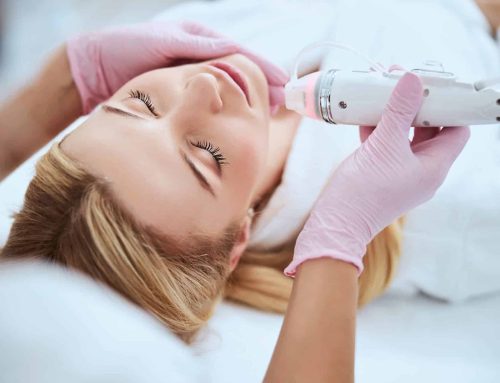
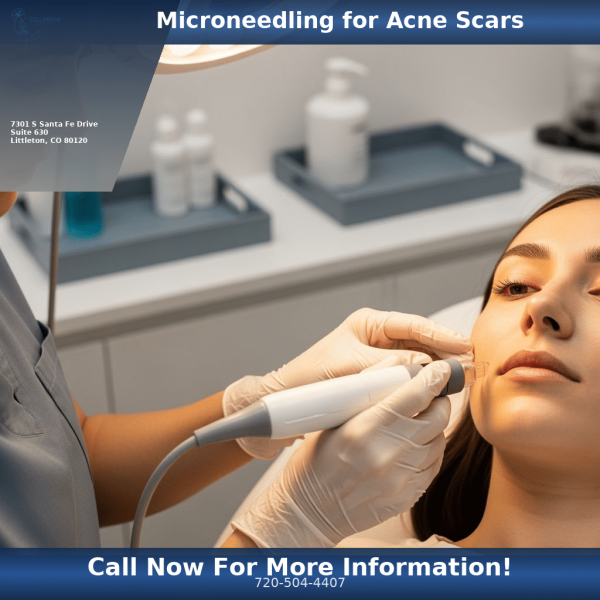
Microneedling creates controlled, uniform micro-injuries at precise depths in the dermis. That sounds counterintuitive as a treatment for scarring, but the mechanism is well-established. The micro-injuries trigger a wound-healing cascade: platelets aggregate, growth factors are released, and fibroblasts migrate to the area and begin synthesizing new collagen and elastin.
The key distinction from an accidental wound is control. The needle depth, pass density, and skin prep determine where that remodeling occurs. For acne scars, the goal is to target the dermal depth where deficient or disorganized collagen resides — typically 1.5 to 2.5 mm, depending on the area of the face and the scar type — and recruit the body’s own repair machinery to replace it with more organized tissue.
This remodeling happens slowly. New collagen matures over 4 to 6 weeks after each session, which is why you space sessions out and why the most visible results appear at the 3-month and 6-month marks rather than immediately after treatment. A systematic review published in the Journal of Clinical and Aesthetic Dermatology found that multiple microneedling sessions produced statistically significant improvement in atrophic acne scars, with four sessions at four-week intervals producing the most consistent outcomes across scar subtypes.
Multiple sessions are required because each one builds on the last. The first session initiates a remodeling response in relatively undisturbed scar tissue. Subsequent sessions continue stimulating collagen in the same zones while the earlier remodeling matures. Treating acne scars with a single session and expecting dramatic improvement sets you up for disappointment — the biology simply doesn’t work that way.
Scar Type Determines Realistic Outcomes
Not every acne scar responds the same way, and this is the conversation Allison has with every patient during consultation before recommending a protocol.
Rolling scars respond best. These broad, wave-like depressions have sloped edges and a relatively shallow depth profile. The fibrous bands tethering the skin downward release gradually as new collagen fills in around them, and the surface contour improves meaningfully over a series.
Shallow boxcar scars — the punched-out depressions with defined vertical edges — also respond well, particularly when the walls are not sharply vertical and the depth is under 0.5 mm. Deeper boxcar scars may see meaningful improvement but rarely achieve full fill.
Icepick scars are the most challenging. Their narrow, deep, V-shaped channels extend into the lower dermis and sometimes into the subcutaneous fat. Microneedling alone reaches the walls of these scars but cannot reliably fill a channel that narrow. A different technique — like TCA CROSS, which applies a high-concentration acid precisely into the channel — often combines better with microneedling for icepick patterns. Allison will tell you directly during consultation whether your scar pattern falls into this category, so you’re not investing in a protocol that isn’t well matched to your anatomy.
Why AnteAGE Growth Factors Change the Outcome
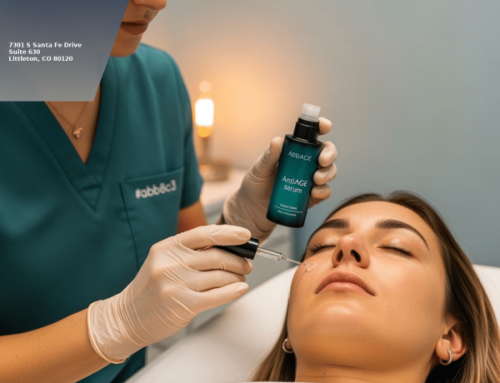
The wound-healing cascade of microneedling triggers depends heavily on the growth factor signals present in the skin during the remodeling window. AnteAGE MD uses bone marrow mesenchymal stem cell conditioned media — essentially the growth factor secretions from stem cells — delivered into the microchannels created by the needling process immediately after treatment.
This timing matters. The microchannels remain open for approximately 20 to 30 minutes post-procedure, creating a direct pathway for growth factors to reach the dermis, where remodeling occurs. Under normal circumstances, growth factors applied topically cannot penetrate beyond the stratum corneum. AnteAGE applied into open channels bypasses that barrier entirely.
The stem cell growth factors in AnteAGE include TGF-β3, which peer-reviewed research associates with scarless wound healing, along with VEGF, FGF, and multiple interleukins that coordinate the inflammatory and proliferative phases of tissue repair. A study in the Journal of Drugs in Dermatology examining growth factor serums in combination with microneedling found enhanced collagen deposition compared to microneedling alone. The practical implication: you’re not just making microchannels; you’re loading them with a signal that tells fibroblasts to produce higher-quality, better-organized collagen at exactly the site where scar tissue exists.
Columbine’s protocol pairs the AnteAGE MD serum with precise depth calibration matched to your scar type — not a one-depth-fits-all approach.
What a Series at Columbine Actually Looks Like
A typical acne scar protocol at Columbine Aesthetics runs 3 to 6 sessions spaced 4 to 6 weeks apart. Pricing is $400 per session or $1,000 for a 3-session series.
Here’s what to expect across that timeline:
- Sessions 1–2: Skin may look temporarily red for 24–48 hours. Pore texture often improves first. Changes in scar depth are beginning internally but are not yet visible.
- Session 3: Around the 3-month mark, most patients notice their first real visible shift — scars appear shallower, skin texture smoother, scar edges less defined.
- Sessions 4–6: Around the 6-month mark, the compounding remodeling becomes more apparent. Rolling scars that were noticeable in raking light often look substantially reduced.
Post-treatment requirements are non-negotiable for good results. Sun avoidance and daily SPF 30+ in 2026 Colorado sun is critical — UV exposure during active remodeling disrupts new collagen and can trigger post-inflammatory hyperpigmentation. Allison also recommends specific post-care products during the series to support the remodeling environment without causing irritation.
The consultation before your first session is where Allison reviews your scar map, your skin history, and whether your pattern calls for a standard 3-session start or a 6-session plan from the beginning. That specificity is what sets a clinical aesthetic practice apart from a spa setting, and it’s the difference between a protocol that’s matched to your actual anatomy and one that’s applied uniformly regardless of what you walked in with.
Sources
1. Systematic review on microneedling for atrophic acne scars — Journal of Clinical and Aesthetic Dermatology: https://www.ncbi.nlm.nih.gov/pmc/articles/PMC4746237/
2. Growth factor serums combined with microneedling and collagen deposition — Journal of Drugs in Dermatology: https://pubmed.ncbi.nlm.nih.gov/24455054/
Frequently Asked Questions
Why Trust Columbine Aesthetics
At Columbine Aesthetics, we believe your aesthetic journey should be as unique as you are. Led by Allison Page, NP-C, our highly skilled Nurse Practitioner with over 20 years of healthcare experience, we combine medical expertise with an artistic eye to deliver natural, beautiful results that enhance — not alter — your appearance.
We specialize in helping clients make informed, confident decisions about treatments such as Dysport® and Botox®. While both smooth fine lines and soften wrinkles, they work in slightly different ways:
- Dysport® offers a quick onset and diffuses more easily across larger treatment areas, making it ideal for broader expression lines.
- Botox® provides exceptional precision, perfect for targeted wrinkle reduction and refined definition.
During your consultation, we’ll take the time to understand your unique goals, explain the subtle differences between options, and design a treatment plan that’s tailored to your desired outcome. Our mission is to ensure you feel comfortable, informed, and excited about your results from start to finish.
In addition to neuromodulators, our comprehensive medical spa menu includes:
- Botox® and Xeomin® injections for wrinkle prevention and correction
- Dermal fillers with hyaluronic acid for restoring youthful volume
- PCA Skin® chemical peels to smooth texture and brighten skin tone
- Microneedling with AnteAGE® growth factors for powerful collagen stimulation
Every treatment is performed with precision and care, ensuring you achieve a refreshed, natural look — never “overdone.”
Serving Littleton, Denver, and surrounding Colorado communities, Columbine Aesthetics is recognized for its client-first approach, rigorous safety standards, and dedication to ongoing education in the latest aesthetic techniques. Whether you want to prevent early signs of aging, rejuvenate your skin, or enjoy a comprehensive facial enhancement plan, our warm and professional environment makes your journey enjoyable and rewarding.
Ready to look and feel your best? Contact Columbine Aesthetics Botox and Medspa in Littleton, CO, today to schedule your personalized consultation and discover why clients trust us for expertise, artistry, and exceptional care.